


.avif)




Plasma and Oxy-Fuel: Fast and Widely Used Solutions
Thermal cutting technologies have a well-established position in steel fabrication.
Plasma cutting offers high productivity across a wide range of plate thicknesses, while oxy-fuel cutting remains a proven solution, particularly for heavy plate. Both technologies can also be used to combine material cutting and bevel preparation within a single process.
Their main advantages are productivity, flexibility and the ability to process large volumes of material.
However, the very principle that makes these technologies effective also creates certain limitations.
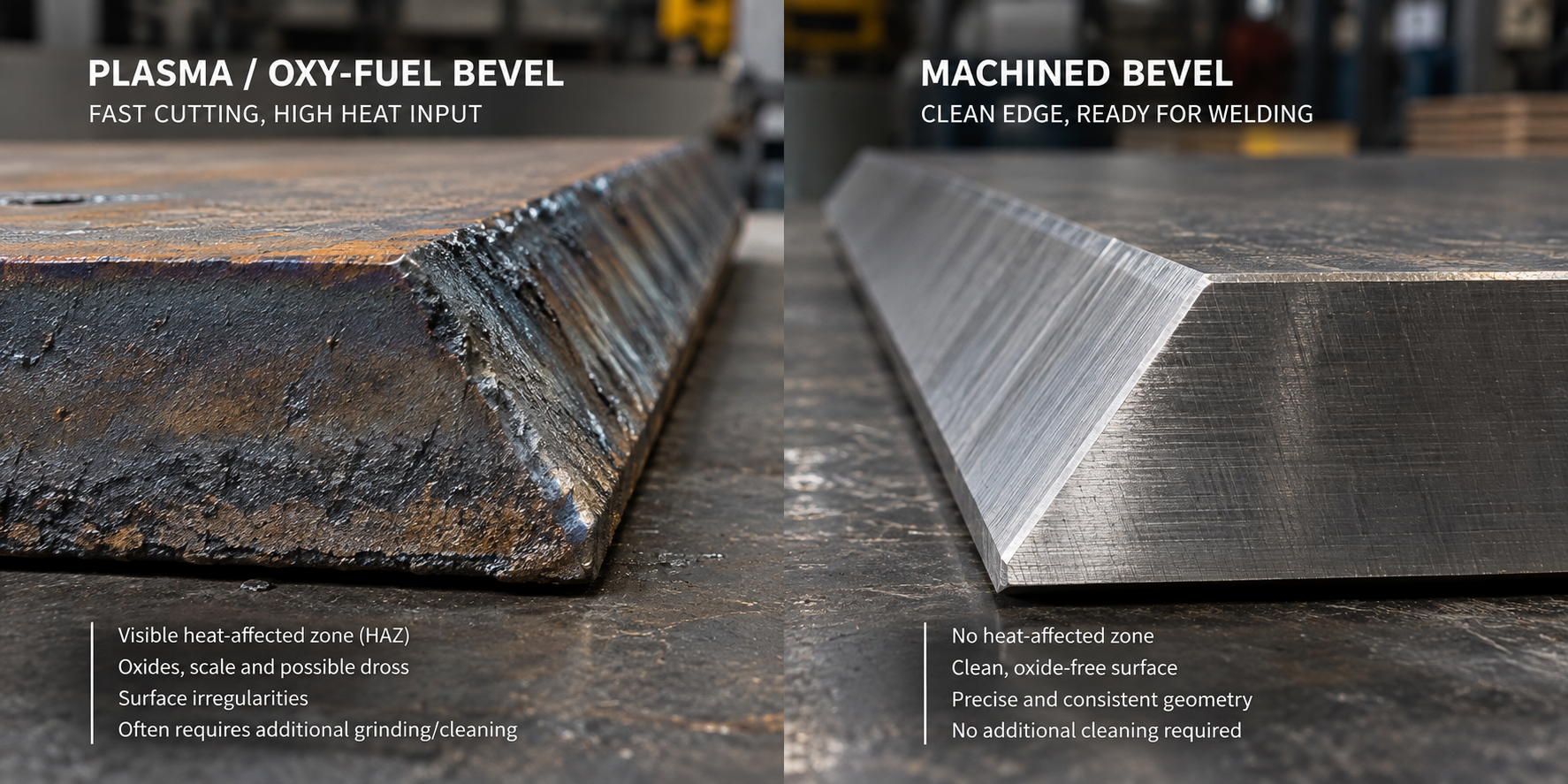
The material is exposed to high temperatures during cutting, resulting in a heat-affected zone (HAZ) along the cut edge.
Heat-Affected Zones and Surface Condition
During plasma or oxy-fuel cutting, the area immediately adjacent to the cut is exposed to significant heat. Depending on the material, plate thickness and cutting parameters, this can result in changes to the material structure and local properties.
The cutting process can also leave oxides, scale, dross or other surface irregularities on the edge.
For some applications, this is perfectly acceptable. For more demanding welded structures, however, the surface condition of the bevel may need to meet specific requirements before welding.
This can make additional edge preparation necessary.
What Happens After Thermal Beveling?
Creating the bevel is not always the end of the process.
Depending on the required weld quality and the specific application, thermally cut edges may require additional operations such as:
- removal of oxides and scale,
- grinding of the bevel surface,
- removal of dross,
- cleaning before welding,
- correction of edge irregularities,
- dimensional and geometric inspection.
Every additional operation requires time, labor and material handling.
When hundreds or thousands of meters of weld edges are processed, even a relatively short additional operation can have a significant impact on overall productivity.
Mechanical Machining: A Different Approach to Beveling
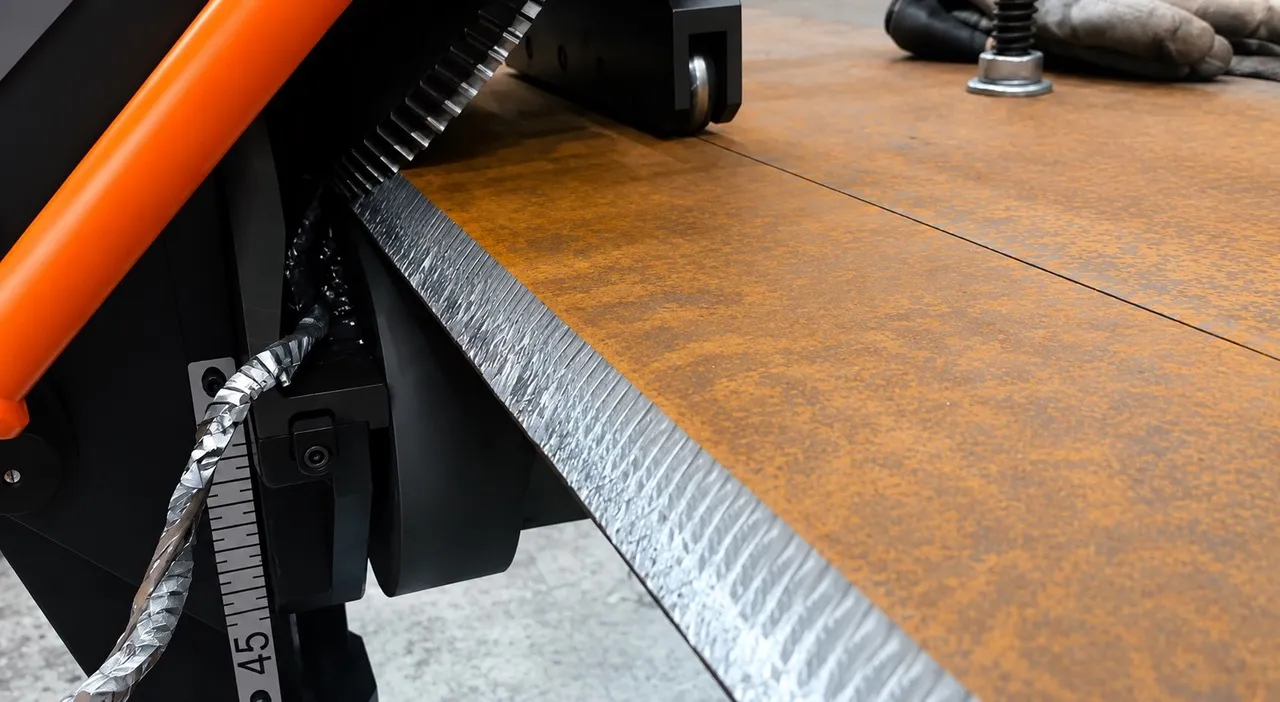
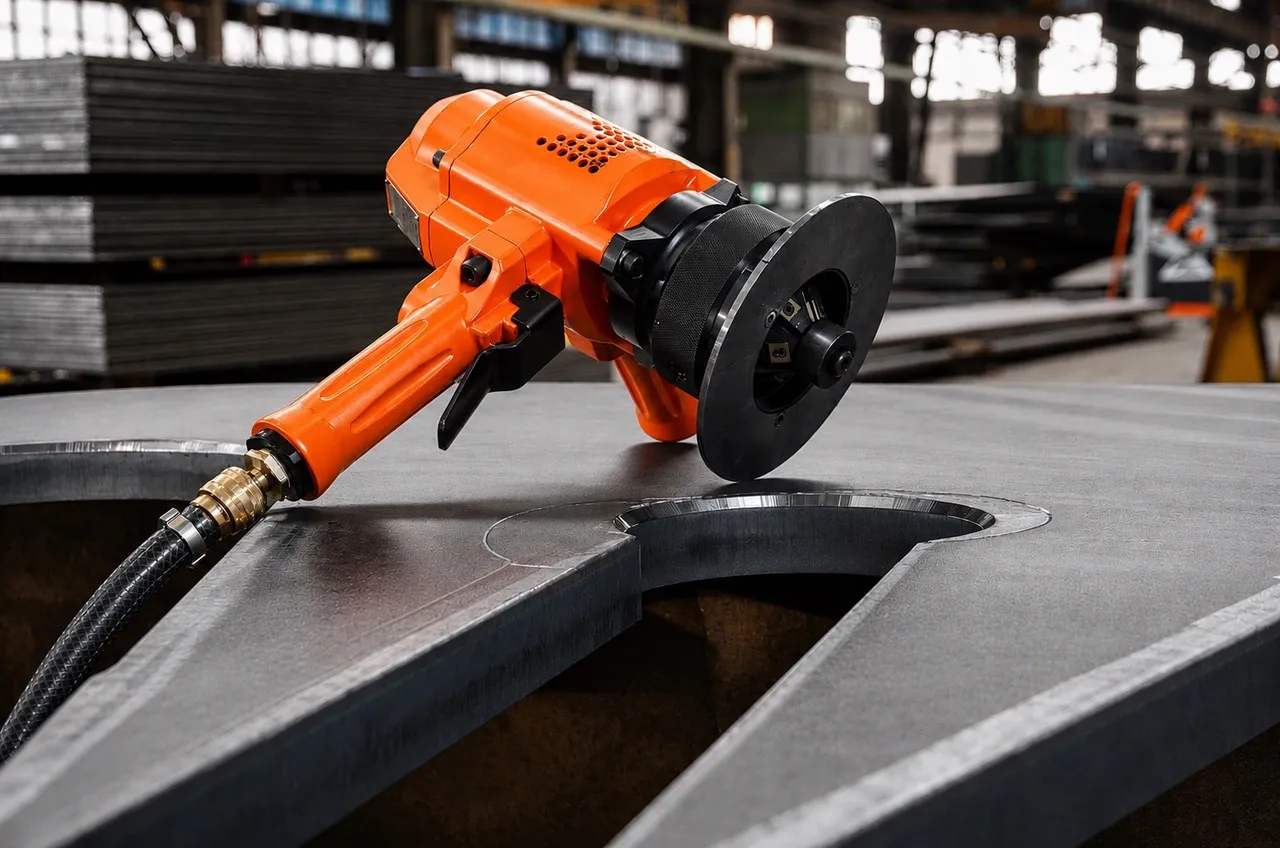
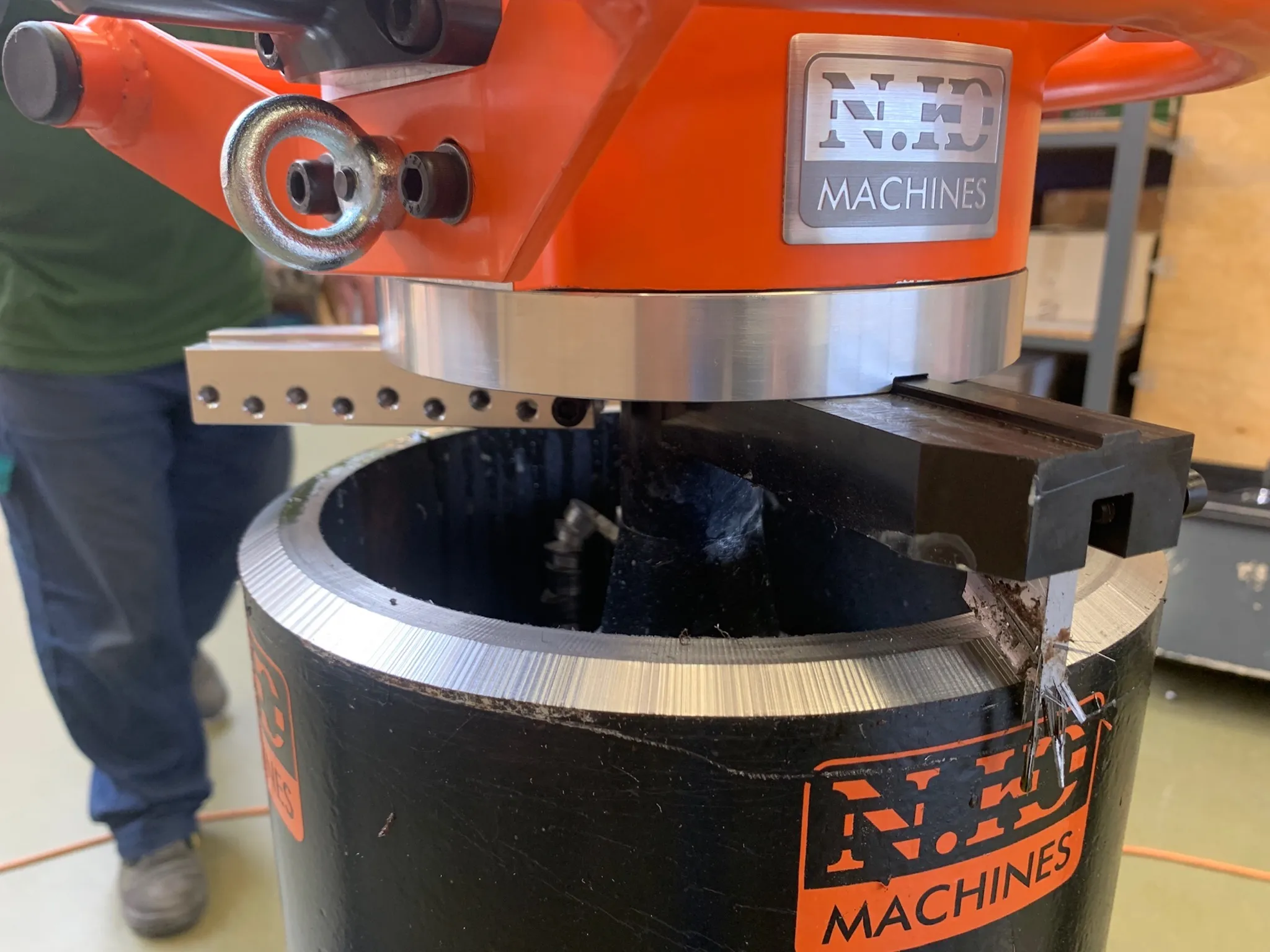
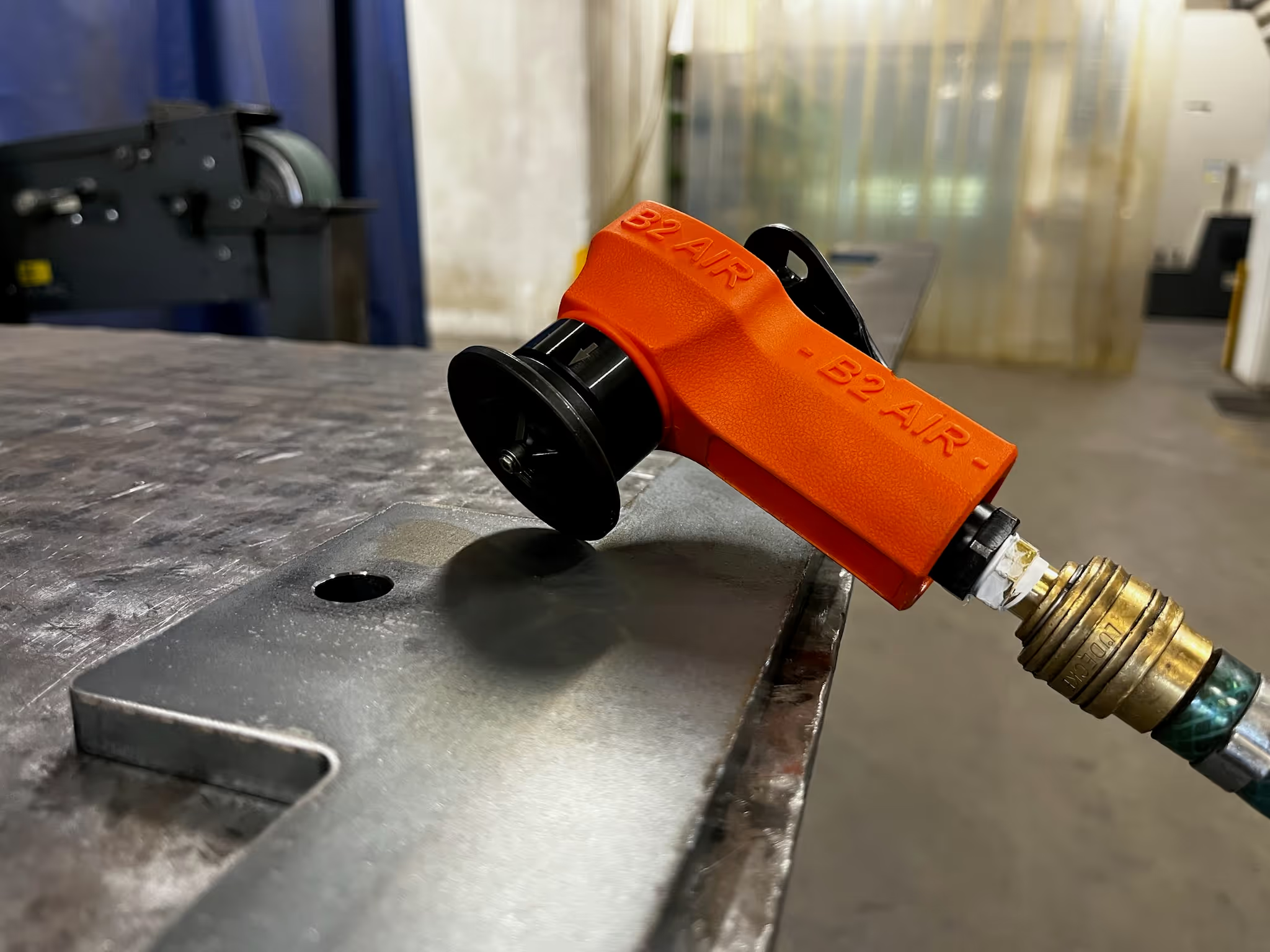
Mechanical beveling uses a cutting tool to remove material from the plate edge. Unlike thermal cutting, the process does not rely on high temperatures to remove material.
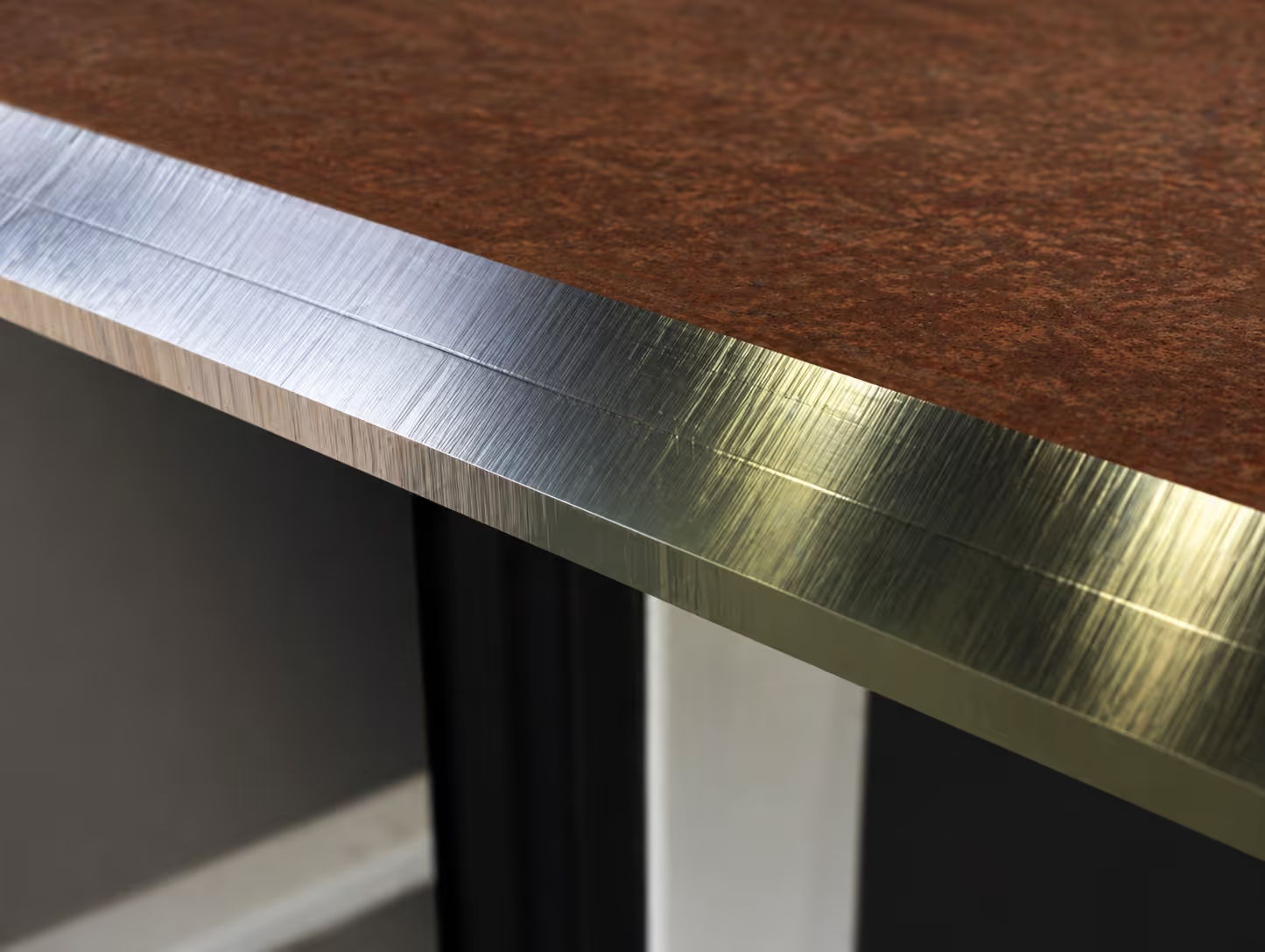
The result is a machined edge without a heat-affected zone.
This can be particularly valuable when weld preparation requirements are demanding or when additional grinding and cleaning after thermal cutting would otherwise be necessary.
Machining also allows the bevel geometry to be controlled very precisely, including the bevel angle, width and overall profile.
This consistency can be important not only for weld quality but also for repeatability in serial production.
A Cleaner Edge Can Mean Less Work in the Welding Shop
One of the key differences between thermal cutting and mechanical machining is the condition of the edge after the operation.
Thermal cutting may require additional cleaning, grinding or surface preparation before welding. A mechanically machined bevel, on the other hand, can often be used directly for the next manufacturing step.
This can simplify the production flow:
Cutting → Beveling → Welding
instead of:
Cutting → Thermal Beveling → Cleaning/Grinding → Inspection → Welding
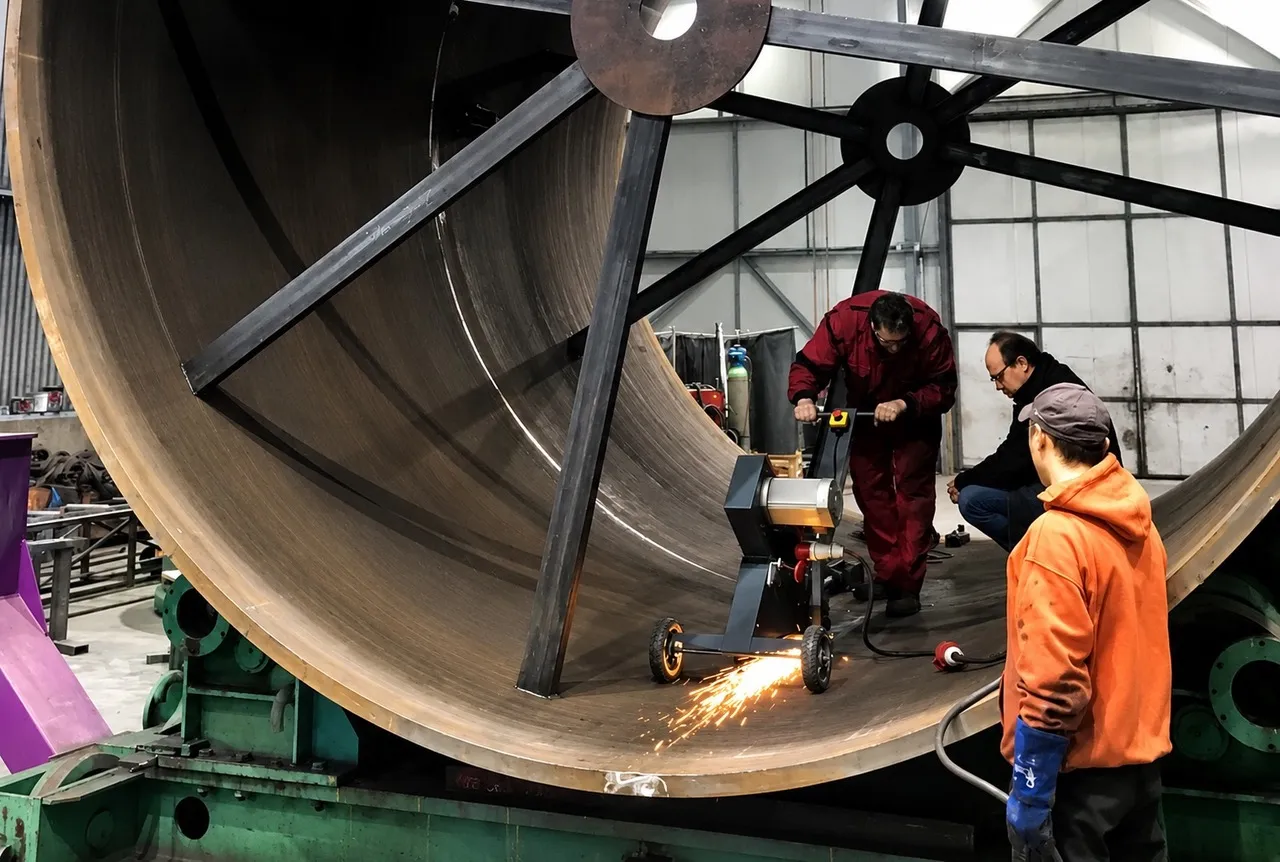
The difference becomes particularly relevant when working with large and heavy components, where every additional handling operation adds time and complexity to the production process.
Economics: Cutting Speed Is Only Part of the Equation
When comparing beveling technologies, it is tempting to focus on the speed of the beveling operation itself.
For a realistic economic comparison, however, manufacturers should consider the total cost of producing a finished weld-ready edge.
This can include:
- cutting or machining time,
- oxygen and fuel gas consumption,
- electricity consumption,
- cutting tools and abrasives,
- labor for grinding and cleaning,
- material handling,
- inspection,
- rework and corrections,
- downtime and coordination between production operations.
Another factor that is becoming increasingly relevant is the cost of industrial gases.
Rising prices for oxygen, fuel gases and other industrial gases can have a noticeable impact on the operating costs of thermal cutting processes. For manufacturers processing large volumes of beveled edges, gas consumption can therefore become a significant part of the overall cost calculation.
Mechanical machining shifts a larger part of the cost structure toward machining time, electrical energy and cutting tools.
The most economical solution therefore depends on the specific application, plate thickness, bevel length, required edge quality and production volume.
When Does Mechanical Beveling Make the Most Sense?
There is no single technology that is ideal for every application.
Plasma and oxy-fuel cutting can be highly efficient when fast material cutting is the main priority and the resulting edge does not require significant additional preparation.
Mechanical beveling becomes particularly attractive when:
- high weld-edge quality is required,
- precise and repeatable bevel geometry is important,
- minimizing heat input is desirable,
- grinding or cleaning would represent a significant part of production costs,
- large volumes of weld edges are processed,
- consistent and predictable production times are important.
The Real Choice Is About the Entire Manufacturing Process
Plasma cutting, oxy-fuel cutting and mechanical machining all have their place in modern steel fabrication.
The decision, however, should not be based solely on the speed of one individual operation.
The more important question is:
How much time, labor and money does it take to produce a truly weld-ready edge?
From this perspective, mechanical beveling can provide a compelling alternative to thermal beveling.
A clean, accurately machined edge without a heat-affected zone can simplify subsequent welding operations, reduce the need for additional finishing and lower the overall amount of manual work.
For steel fabricators, mechanical beveling is therefore not only a question of edge quality. It can also be a way to simplify the manufacturing process, improve consistency and maintain better control over total production costs.