
Inglés
Preguntar
.avif)
Las estructuras de las turbinas eólicas funcionan bajo cargas cíclicas continuas durante décadas.
Las secciones de la torre, las bridas y los componentes estructurales están expuestos a esfuerzos constantes, condiciones exteriores y un acceso limitado para el mantenimiento.
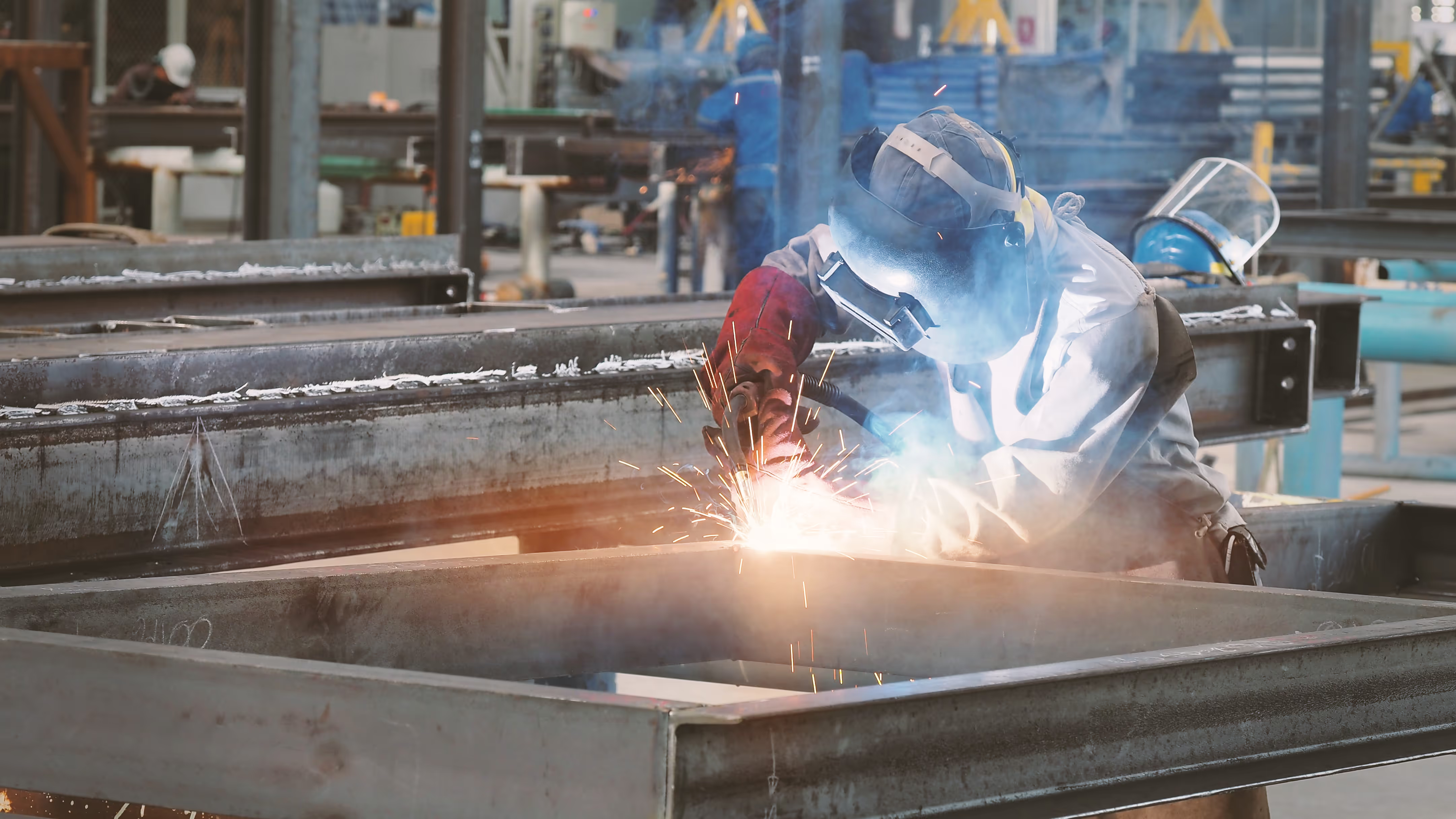
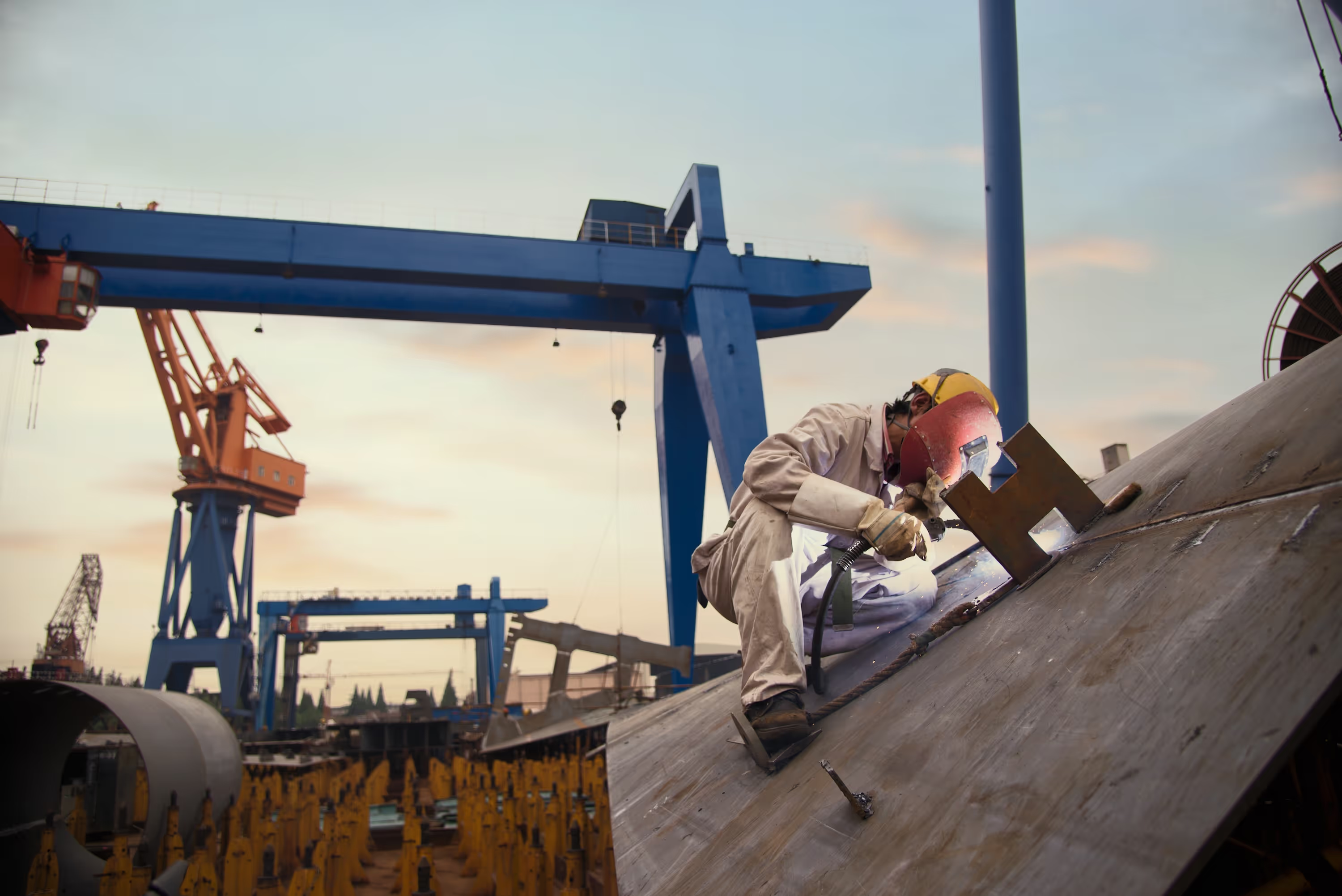
En este entorno, la preparación de la soldadura determina directamente la fiabilidad a largo plazo de toda la turbina.
Una torre de turbina soporta millones de ciclos de carga a lo largo de su vida útil.
La fatiga en las uniones soldadas comienza cuando la geometría del bisel o la calidad de la superficie no son óptimas. Los fabricantes deben entregar componentes que cumplan con estándares estrictos, no solo en el momento de la instalación, sino durante más de 20 años de funcionamiento.

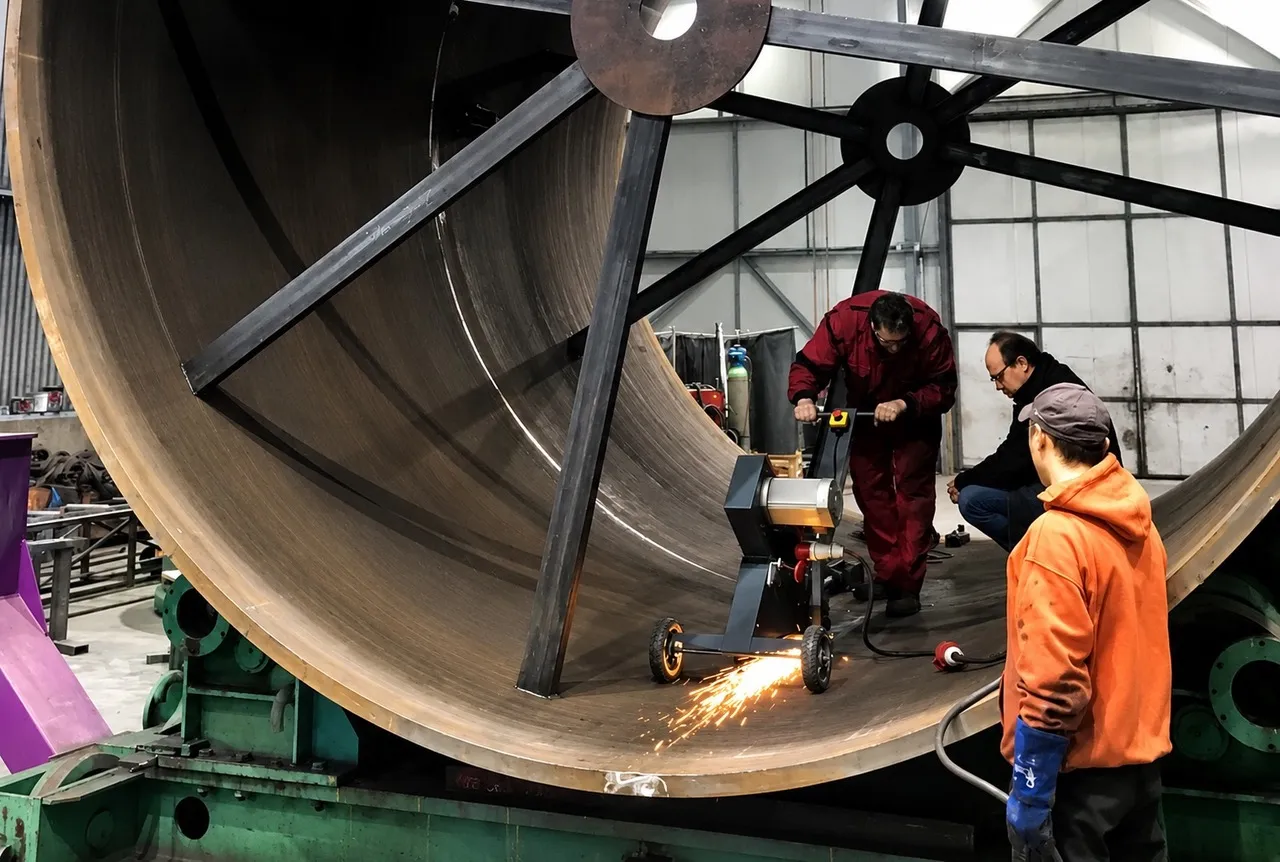
Las torres de los aerogeneradores suelen fabricarse con placas de acero de entre 20 y 80 mm de espesor, soldadas para formar secciones cilíndricas o cónicas.
Estas estructuras están sujetas a:
Incluso las pequeñas imperfecciones en la preparación de la soldadura pueden convertirse en puntos de inicio para grietas por fatiga.
Normas como la EN 1090-3 o la ISO 5817 (nivel de calidad B) definen requisitos estrictos para la calidad y la inspección de la soldadura.
En muchos casos, se requiere un 100% de pruebas no destructivas.
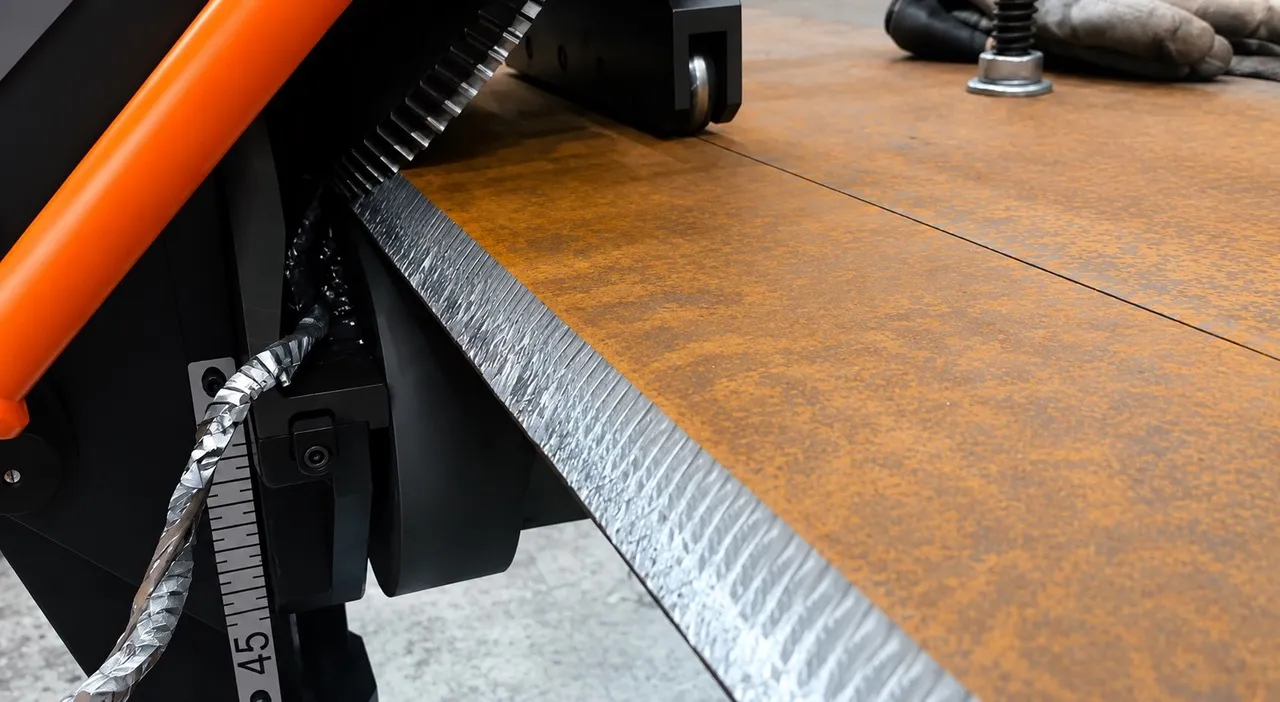
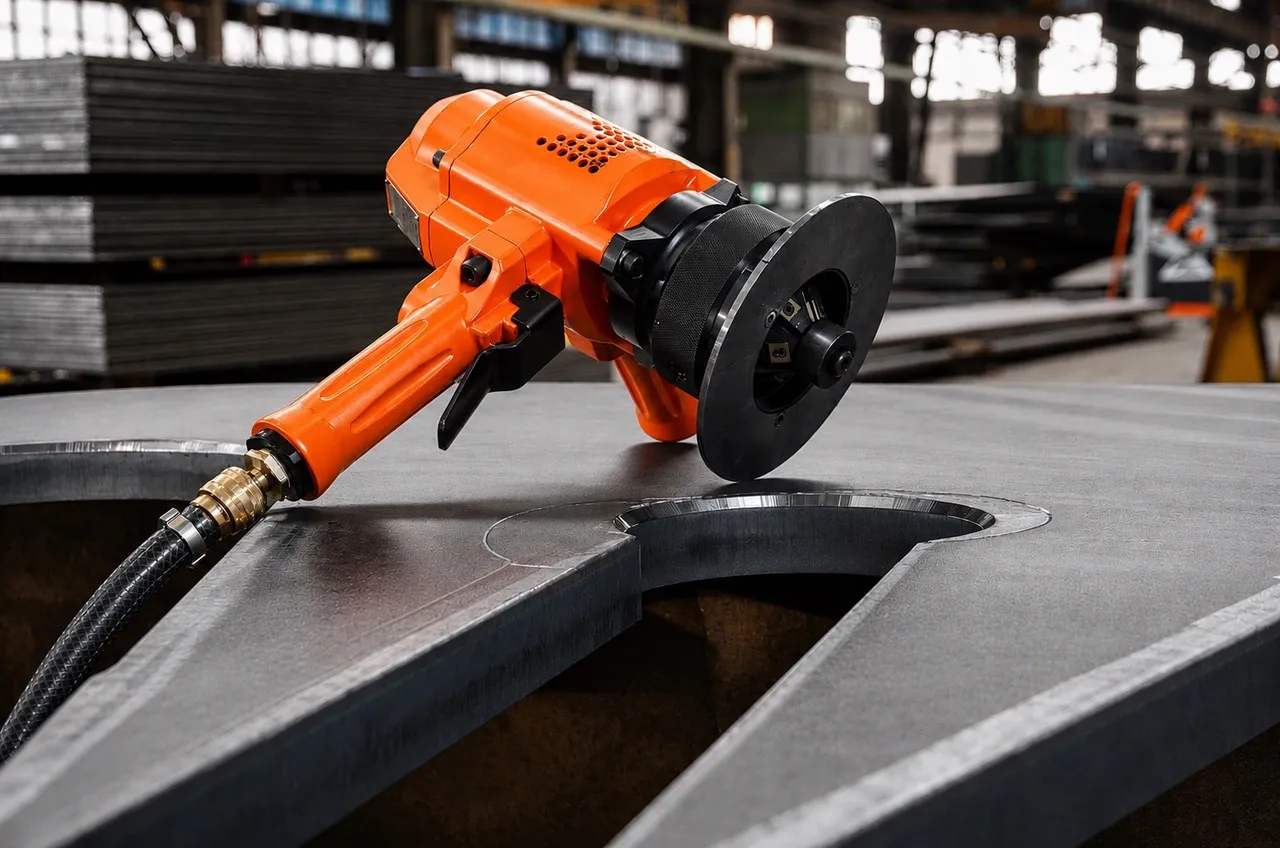
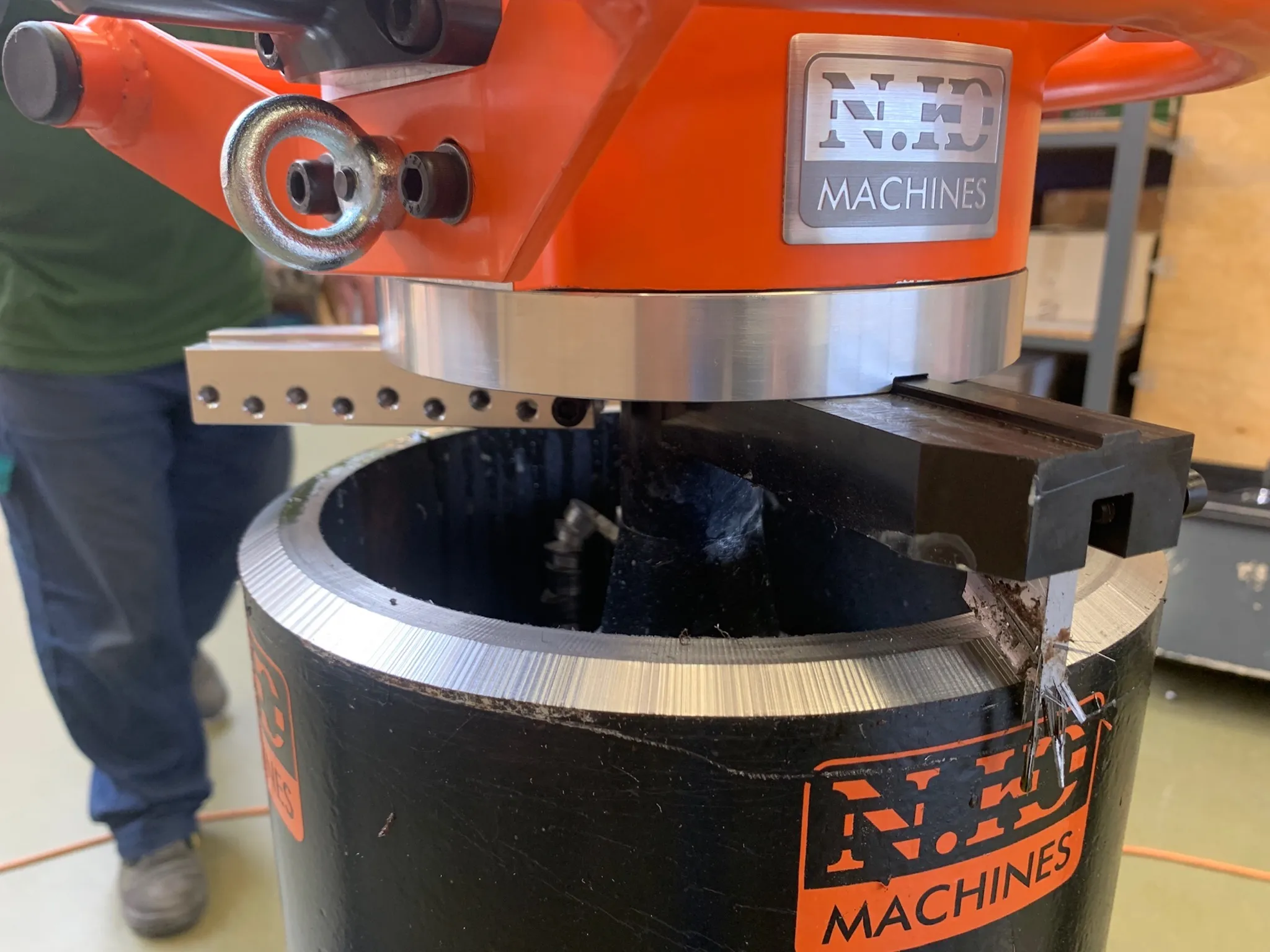
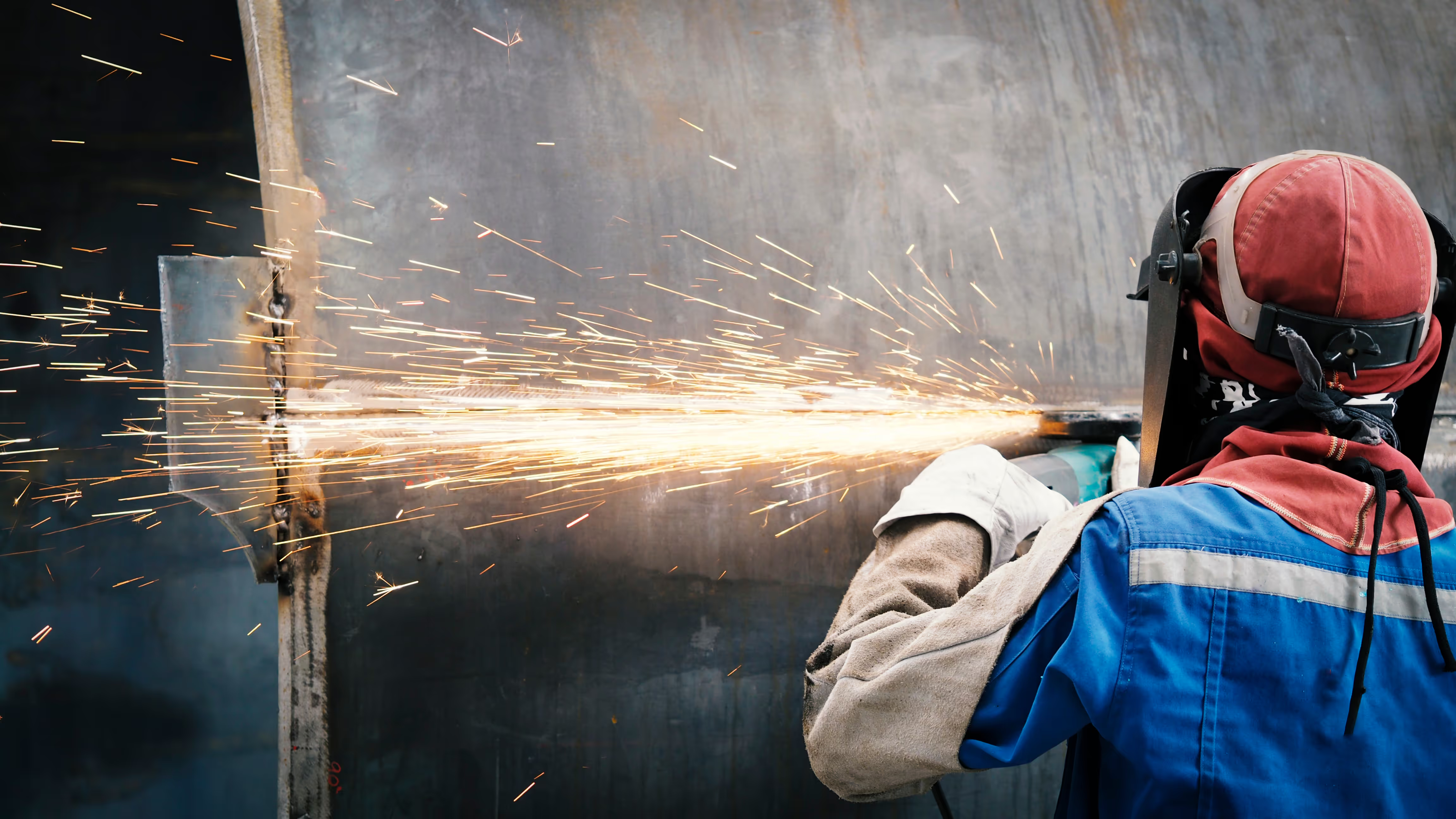
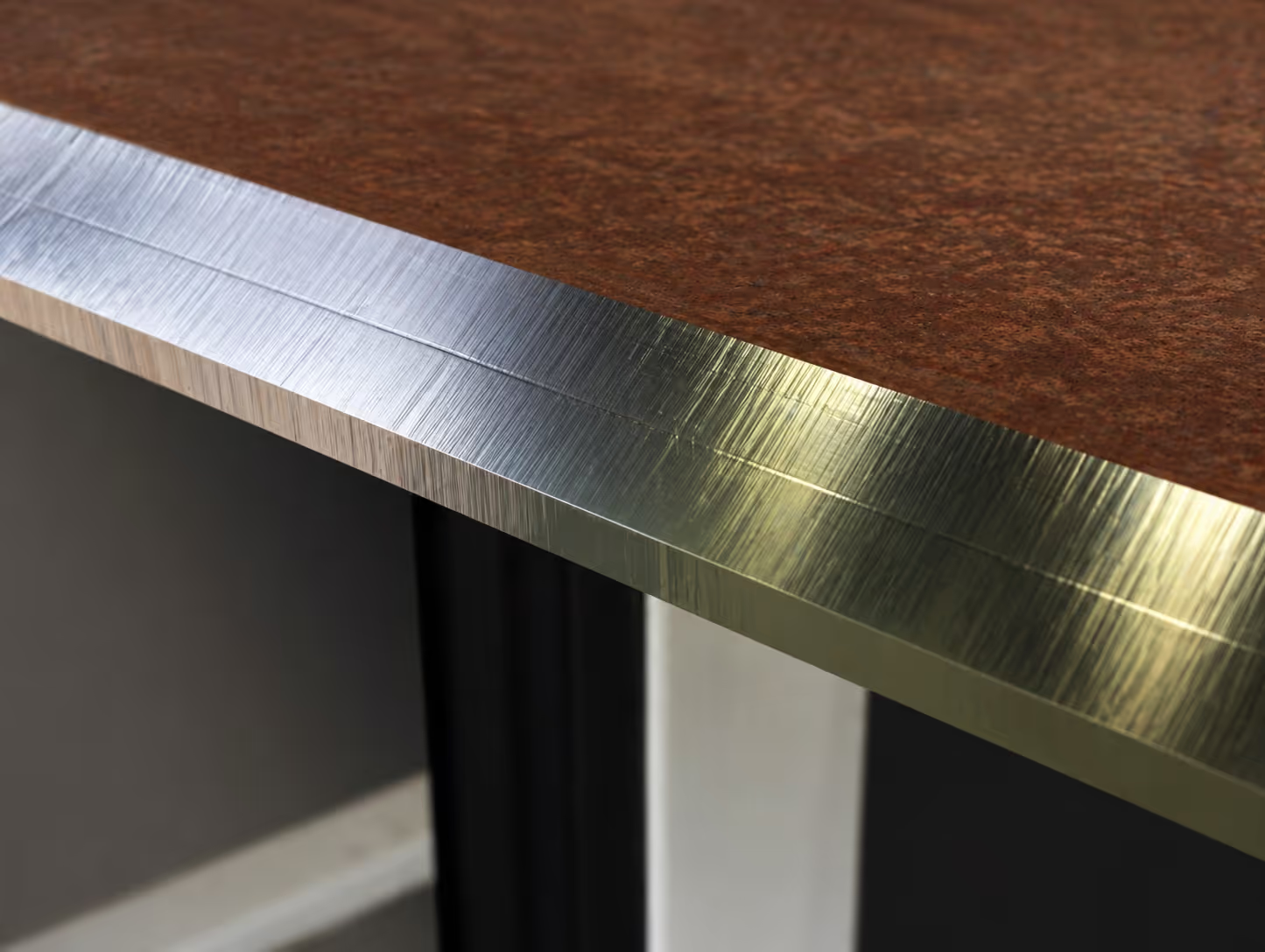
El biselado mecanizado garantiza superficies limpias, geometría precisa y repetibilidad, lo que favorece el rendimiento de la soldadura durante una larga vida útil.

Los componentes de las turbinas eólicas se fabrican en serie. El mecanizado garantiza una geometría de bisel idéntica en todas las secciones, independientemente del operario o del turno.
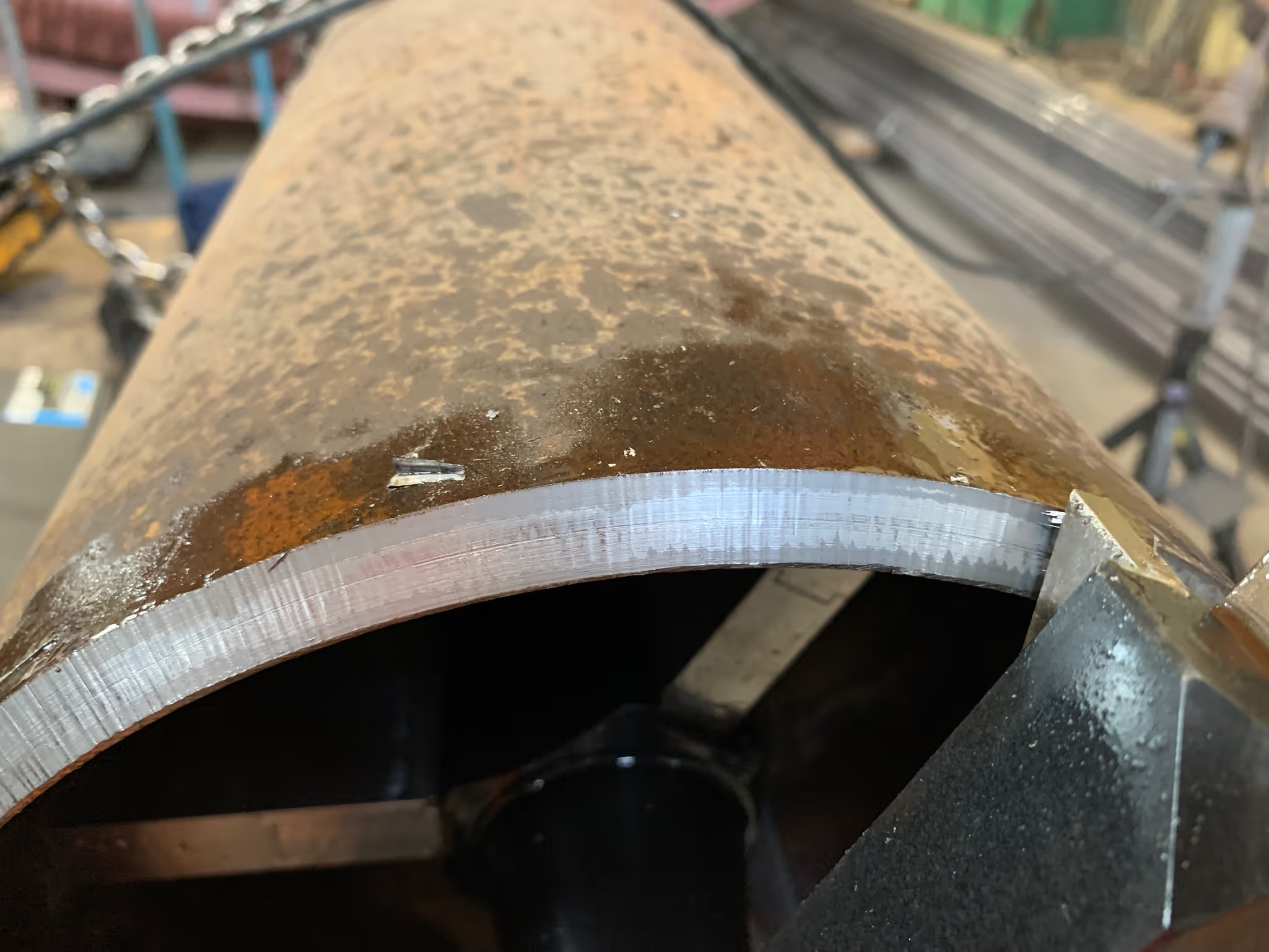
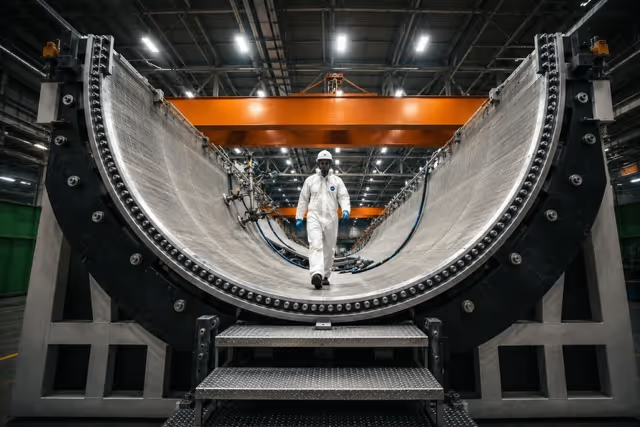
Las superficies limpias y mecanizadas con precisión mejoran la integridad de la soldadura.
Esto contribuye directamente a la resistencia a largo plazo frente a fallos relacionados con la fatiga.
Con un estándar de inspección del 100%, cada defecto detectado conlleva costosos retrabajos.
Una preparación precisa mejora significativamente las tasas de aceptación en el primer intento.
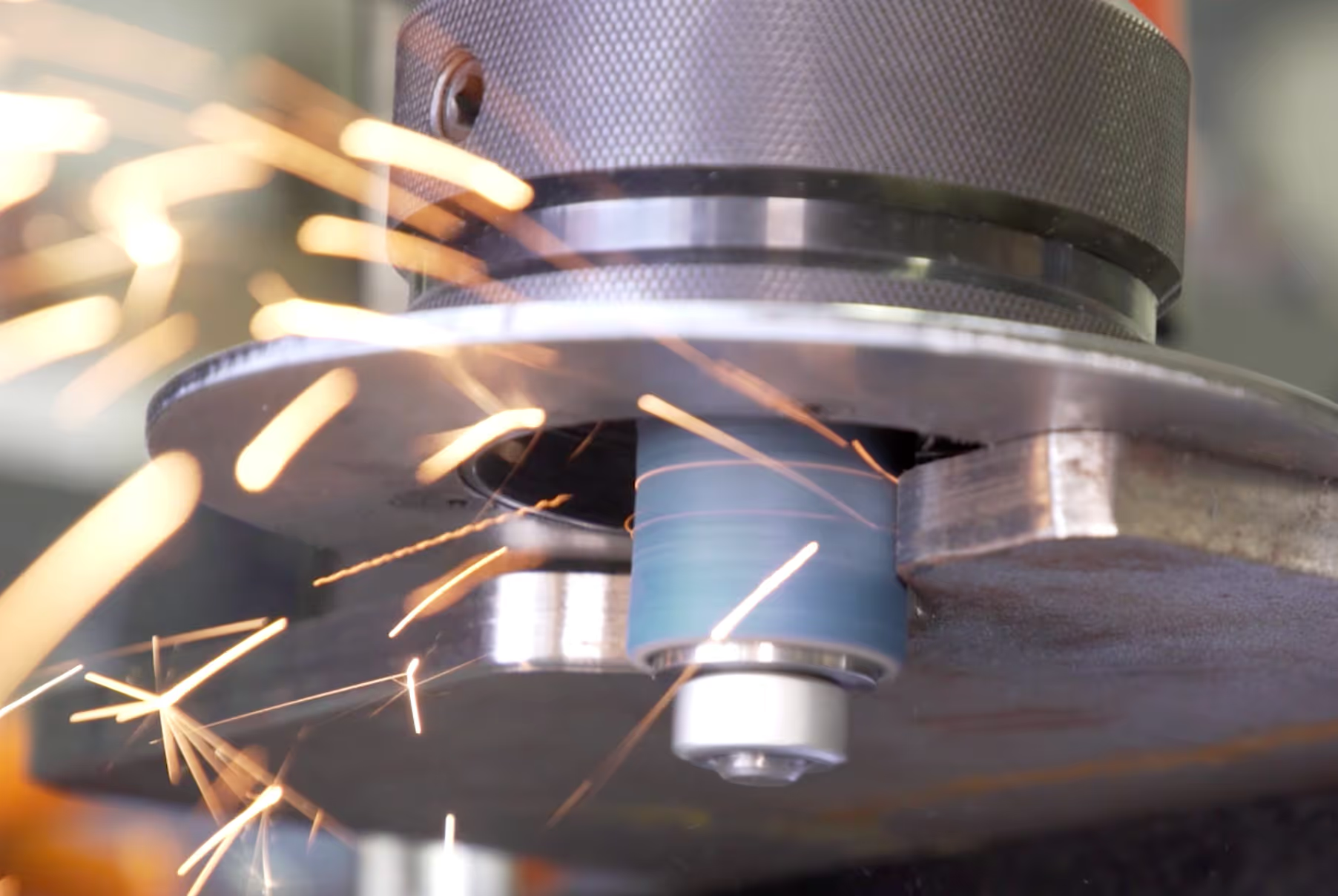
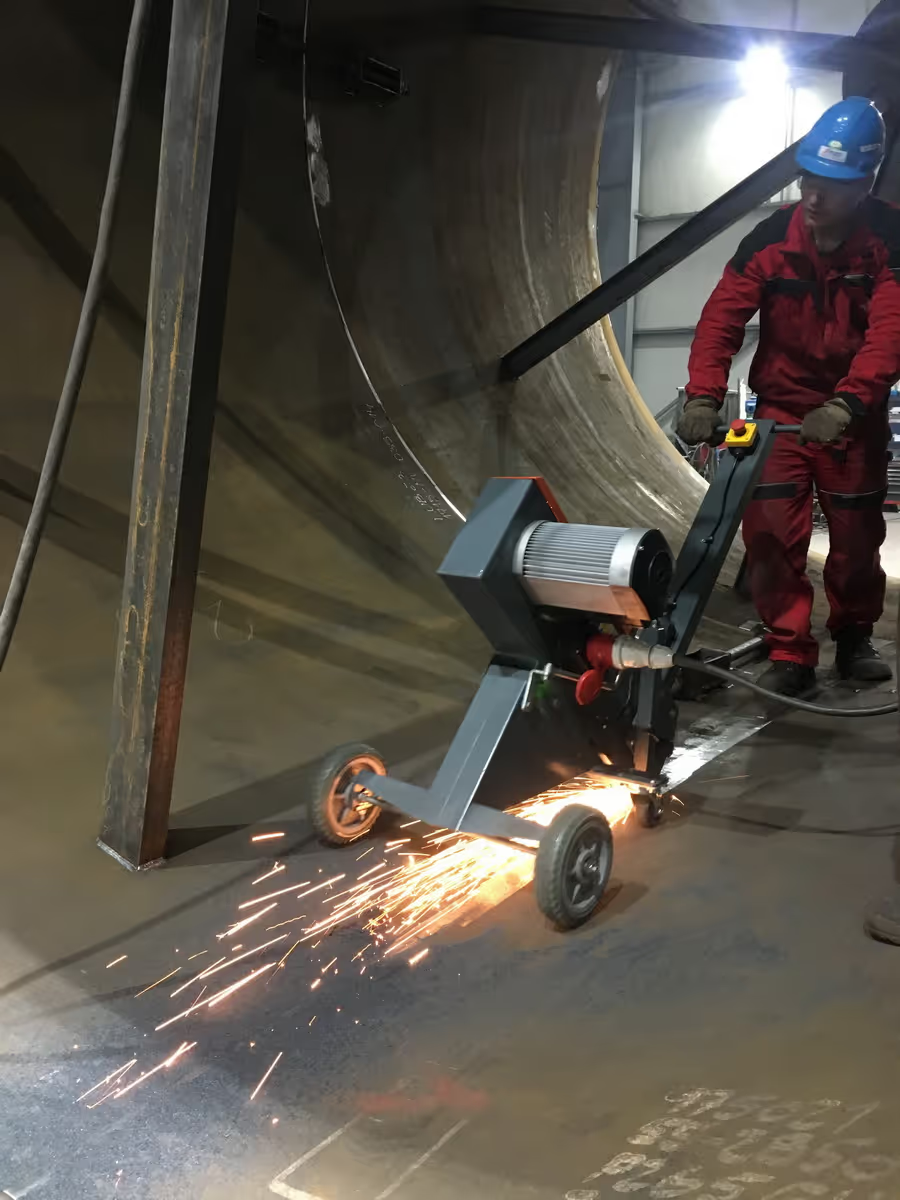
Las bridas son nodos estructurales críticos que conectan las secciones de la torre.
Requieren una geometría de bisel uniforme en toda la circunferencia, algo que el mecanizado proporciona de forma fiable.
La producción a gran escala utiliza sistemas de soldadura automatizados para las costuras longitudinales y circunferenciales.
Una preparación uniforme del bisel es esencial para un funcionamiento estable y eficiente.

Los organismos de certificación, como TÜV o DNV, exigen procesos documentados y repetibles.
El biselado mecanizado facilita el cumplimiento de las normativas y simplifica las auditorías.
Todas operan bajo la misma presión: alto volumen de producción, plazos de entrega estrictos y requisitos de fiabilidad a largo plazo.
Las turbinas eólicas están diseñadas para funcionar de forma continua durante 20 años o más.
Un defecto en una junta soldada puede ocasionar reparaciones costosas, tiempos de inactividad o una reducción de la integridad estructural.
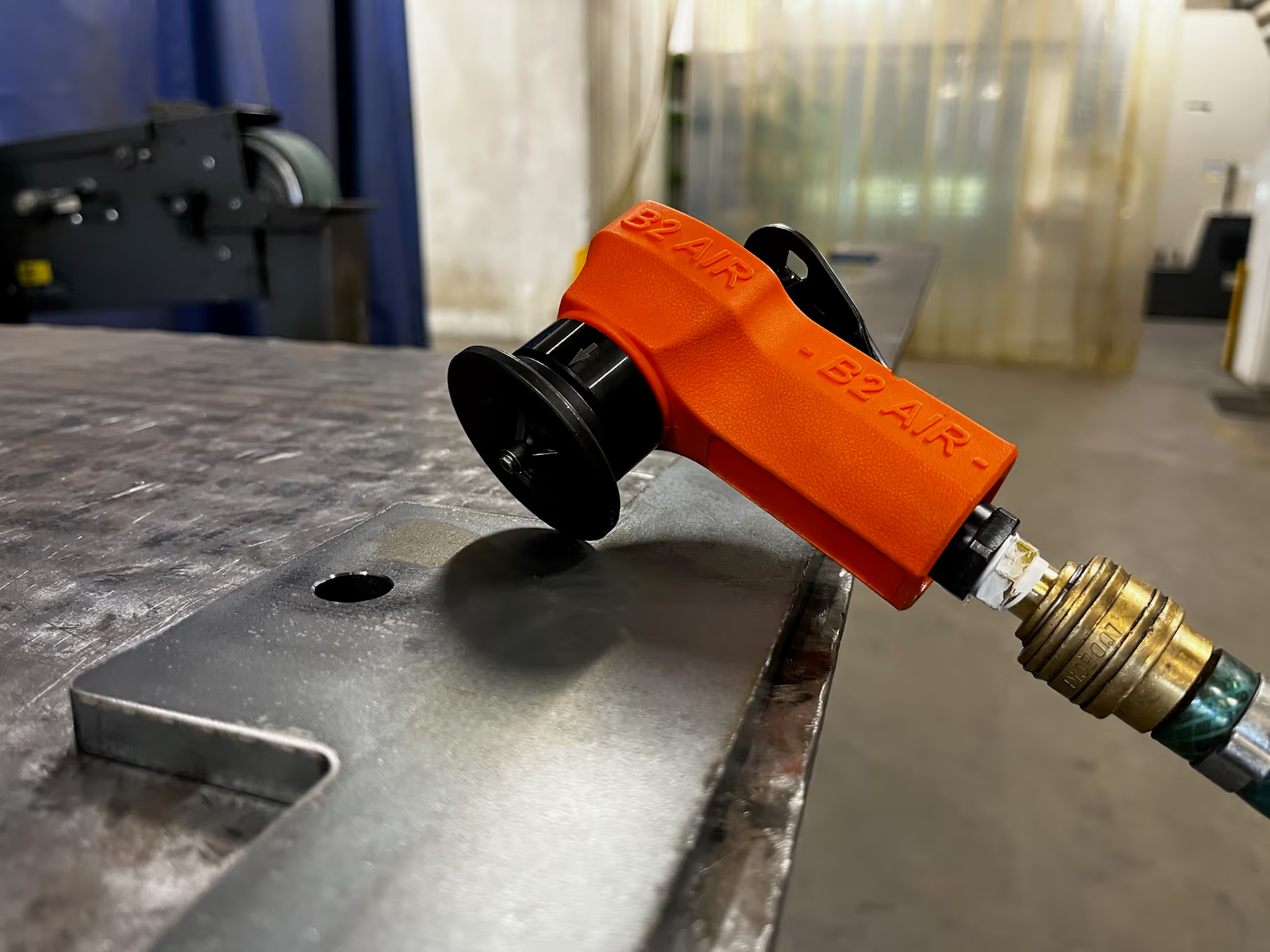
Las máquinas biseladoras ayudan a garantizar una preparación de soldadura uniforme desde el principio, lo que favorece un rendimiento a largo plazo y reduce los costes del ciclo de vida.